Material Movement Without Subcontractor Delays
Trucking in Lake Helen for fill delivery, spoil removal, and site hauling when project timelines are tight
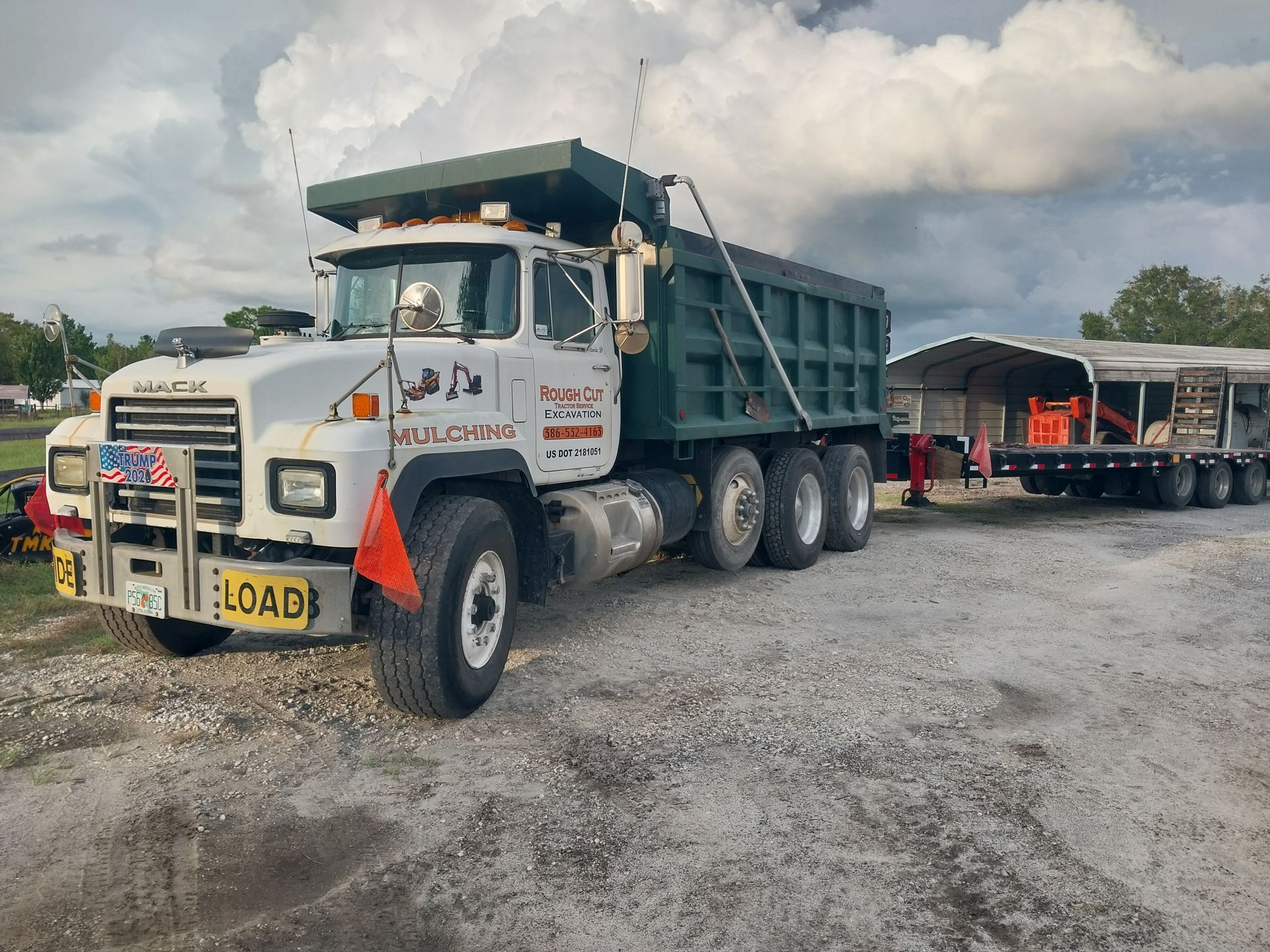
Coordinating a site project around a third-party trucking company introduces scheduling variables that can stretch a two-day job into a week. Rough Cut Tractor Service owns and operates its dump trucks directly, hauling fill material, gravel, topsoil, and crushed asphalt to job sites across Lake Helen and Volusia County without relying on outside carriers. Rough Cut also maintains its own dirt pit, which means material sourcing and delivery happen through a single point of contact rather than separate vendors working on different schedules.
Florida site work has specific hauling demands that differ from other regions—the combination of sandy soils, high water tables, and frequent excavation projects means contractors regularly need fill material that compacts reliably and resists washout. Crushed asphalt, for example, binds together under load in a way that loose gravel doesn't, making it a practical choice for driveways and stabilized pads in areas that see heavy rain. Knowing which material suits the application is part of what owned-operation trucking provides that a simple freight carrier cannot.
Arrange a delivery estimate by describing your site location, required material, and approximate volume needed.
What Proper Site Hauling Requires
Effective trucking on a construction or land-clearing site requires matching truck capacity to load type, understanding legal weight limits on local roads, and sequencing deliveries so material arrives when the receiving crew is ready to place it. Rough Cut's dump trucks are sized for the types of loads common across Volusia County site work—bulk soil and gravel deliveries, debris removal after excavation, and multi-load jobs where consistent truck availability keeps other crew members productive rather than waiting.
When spoil removal is the task, you'll notice the difference between a contractor who controls their own trucks and one who coordinates externally: owned equipment can stage a second load while the first is being placed, eliminating the dead time that accumulates over a full day of work. On delivery projects, material arrives in consistent load sizes rather than variable amounts, which makes grade planning more predictable for the crews spreading and compacting what's brought in.
Rough Cut's trucking integrates directly with its land clearing, excavation, and grading services—which means spoil generated during site prep can be removed in the same mobilization rather than requiring a second contractor to schedule separately. Projects that combine clearing, grading, and hauling under one operator move faster and produce fewer coordination errors between phases.
What Property Owners Usually Ask
Hauling questions usually come down to materials, load quantities, and how trucking fits into the broader project schedule. The following answers address what Lake Helen and Volusia County clients ask most often before committing to a hauling arrangement.
What materials does Rough Cut deliver or remove?
Owned trucks handle fill dirt, topsoil, gravel, crushed asphalt, and excavation spoil—material sourced from Rough Cut's own pit where applicable, or coordinated from a supplier suited to the project requirements.
How does owning a dirt pit affect pricing compared to sourcing material externally?
When material comes from an owned pit, you eliminate the markup that typically appears when a contractor purchases from a third-party supplier and passes the cost through—the sourcing and hauling operate as a single transaction.
Why does road classification matter for dump truck hauling in this region?
Weight limits on secondary roads throughout Volusia County affect how loads must be split across trips, and a contractor familiar with local road classifications plans haul routes accordingly rather than discovering restrictions mid-project.
When should hauling be scheduled relative to other site work?
Spoil removal works best when excavation is active so trucks can load directly from the dig rather than double-handling material; fill delivery should be timed to coincide with grading crew availability to avoid delivered material sitting unspreaded in rain.
How does Lake Helen's location along the I-4 corridor affect trucking logistics?
Proximity to the I-4 corridor means Rough Cut can reach job sites across Central Florida efficiently, but local secondary roads between Lake Helen and coastal Volusia County sites may require adjusted routing depending on load weight.
Rough Cut Tractor Service coordinates trucking as a standalone service or as part of a broader site project—call (386) 479-1457 to discuss load volume, material type, and scheduling for your specific site.