
Retention and Decorative Ponds Excavated to Permit Specifications
Pond Excavation in Lake Helen for builders and developers requiring stormwater retention basins, drainage ponds, and decorative water features on Florida sites with clay and sandy soil profiles
Rough Cut Tractor Service excavates retention ponds, drainage ponds, and decorative water features for builders and developers across Lake Helen and Volusia County using owned heavy equipment and material management capabilities that include an on-site dirt pit for fill sourcing. Florida pond excavation is not simply a matter of digging to a specified depth—stormwater compliance requirements, clay layer identification for water retention, and spillway grading all factor into how the excavation is designed and executed. Clients planning a pond as part of a larger site development project benefit from having the same contractor manage pond excavation alongside grading and drainage work, because the two systems interact directly.
Clay layer identification is the central technical challenge in Florida pond excavation. Sandy soil profiles in Volusia County and Central Florida do not hold water without an intact clay layer at depth—ponds excavated through the clay stratum into underlying sand drain rather than retain. Locating that clay boundary before excavation determines how deep the pond can go without losing retention capacity, and it affects decisions about whether imported clay liner material is needed to compensate for soil conditions at a specific site. These are field decisions made by operators with hands-on experience in regional soil profiles, not calculations that can be made reliably from surface observation alone.
Request a site evaluation to review soil conditions, clay layer depth, and drainage routing requirements before pond excavation dimensions are finalized.
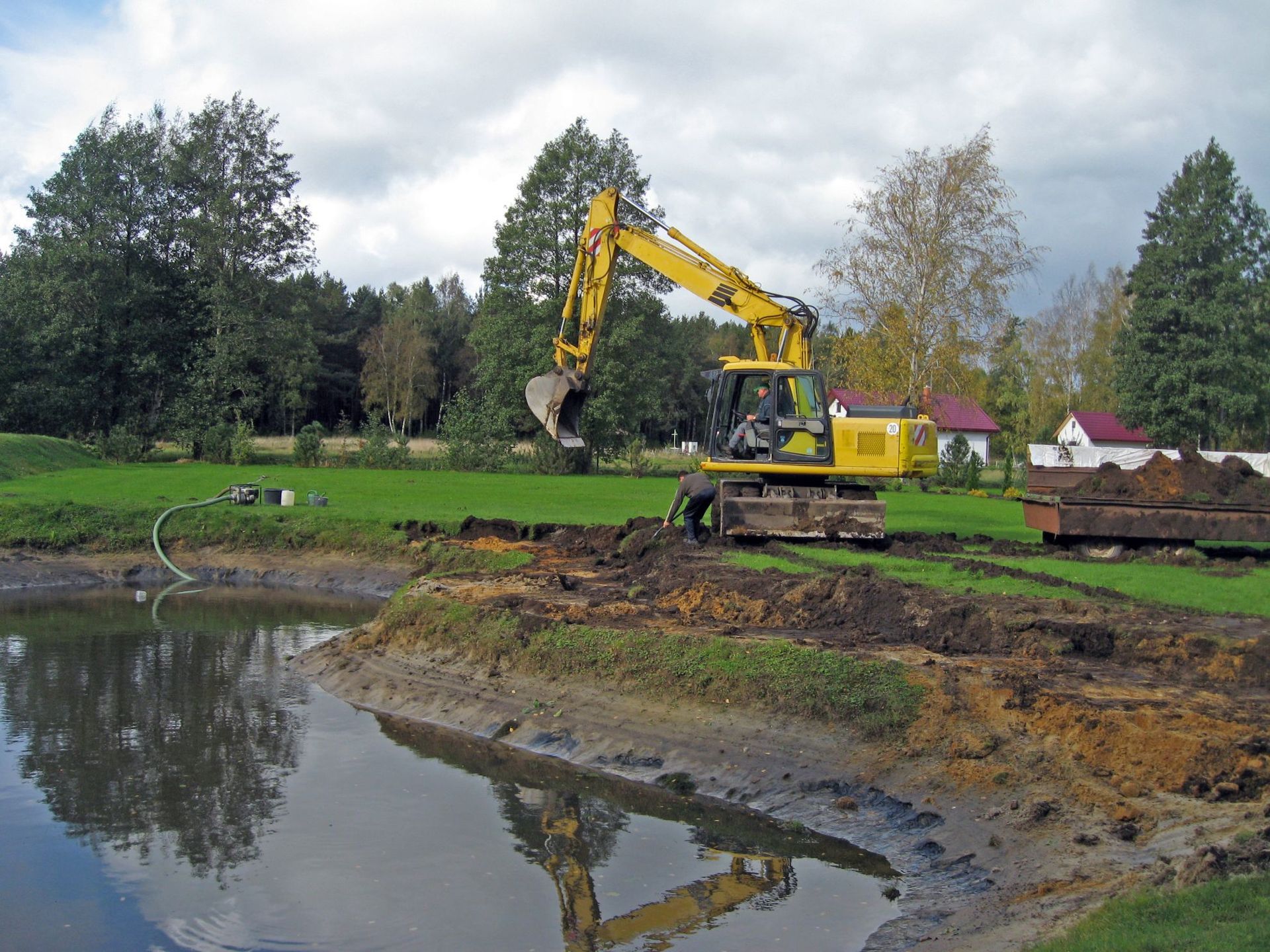
What Pond Excavation Actually Accomplishes on a Developed Site
Pond excavation at Rough Cut Tractor Service integrates into the broader site development workflow rather than operating as a standalone dig. Excavated material is screened and evaluated for reuse as fill on adjacent areas of the site, which reduces the volume of material that needs to be hauled off and lowers overall project cost. Spillway grading and drainage outlet positioning are addressed during excavation rather than retrofitted afterward, because the geometry of the surrounding land determines where water enters and exits the pond during heavy rain events—a critical design consideration for stormwater compliance in Florida's wet climate.
Once pond excavation is complete and the basin has stabilized, the observable function is a defined water body that collects and retains stormwater from the site's drainage routing, reducing sheet flow across developed surfaces and keeping runoff on-site during heavy rain events. On sites where standing water previously accumulated in low areas without a defined outlet, a properly excavated and graded retention pond directs that water into a controlled location where it can dissipate at a managed rate. The perimeter grading and spillway establish where overflow exits the system rather than where gravity decides it goes.
Pond excavation in Florida requires permitting through state and county stormwater management authorities, and the permit documentation specifies design parameters including surface area, depth, embankment slopes, and outlet structure requirements. Rough Cut's full site development capability means pond design integration—how the pond connects to the site's overall drainage layout—is handled within the same project scope rather than coordinated between separate contractors who may not communicate effectively about how their systems interact.
Questions Before Starting Your Pond Project
Pond excavation projects in the Lake Helen area involve soil, permitting, and drainage variables that are specific to Florida's geology and climate. The questions below address what developers and property owners typically need to clarify before work begins.
How does clay layer depth determine pond design in Volusia County?
When the clay stratum sits shallow, a standard excavation depth achieves retention capacity; when clay is deep or discontinuous, the pond design must account for liner requirements or adjusted depth specifications to prevent the basin from draining into underlying sand.
What permits are required for retention pond excavation in Lake Helen?
Stormwater retention ponds on development sites typically require review and approval through the St. Johns River Water Management District and local county authority, with design documentation covering basin dimensions, drainage area calculations, and outlet structure specifications.
Why does spillway placement matter during excavation rather than after?
Spillway geometry determines where overflow exits the pond during storm events, and grading that directs overflow to an unintended location causes erosion and drainage failures that are significantly more costly to correct after the pond is in use than to design correctly during excavation.
How is excavated pond material handled on a development site?
Sandy overburden removed during pond excavation is screened and evaluated for reuse as structural fill on adjacent site areas; material that doesn't meet fill specifications is staged for removal, and Rough Cut's dirt pit provides a sourcing and staging option that keeps material logistics on-site.
When should pond excavation be scheduled relative to other site development phases?
Pond excavation is typically completed before final site grading so that drainage routing from the graded surface can be directed to the finished pond without requiring regrading of areas already brought to finish elevation.
Rough Cut Tractor Service handles pond excavation as part of integrated site development projects across Volusia County, with owned equipment and direct owner involvement on every job. Call (386) 479-1457 to discuss your pond's design requirements and schedule a soil and drainage assessment.