Ground Made Ready Before Construction Begins
Land Clearing in Lake Helen for overgrown parcels, storm-damaged properties, and development sites requiring complete vegetation removal and debris disposal
A cleared parcel looks fundamentally different from a wooded or overgrown one—stumps are gone, root masses are no longer buried hazards for equipment operators, and the ground surface is accessible for grading and drainage work. Rough Cut Tractor Service produces that result using owned forestry equipment and heavy machinery across Lake Helen and the surrounding Volusia County area, with no dependence on subcontracted crews or rental equipment that introduces scheduling gaps. Property owners preparing land for construction, developers working to activate parcels along the I-4 corridor, and property managers dealing with storm damage all bring different clearing requirements, and the scope of work on each is shaped by what's actually on the ground.
Florida land clearing involves regulatory layers that don't apply in every other state. Wetland buffer setbacks determine how close clearing equipment can operate to protected vegetation, and those boundaries must be identified before work begins—not after. Environmental sensitivity around tree species, ground cover, and water features in Central Florida requires permitting review on most commercial and large residential clearing jobs. Beyond the regulatory piece, debris management is a significant operational variable: vegetation grinding and mulching handles material on-site while heavy debris removal requires staging and hauling, and the approach depends on what the parcel will be used for afterward.
Schedule a parcel walk-through to assess vegetation density, debris volume, and permitting requirements before clearing timelines are established.
Why Debris Management and Equipment Choice Drive Clearing Results
Land clearing at Rough Cut Tractor Service uses forestry mulching equipment alongside traditional heavy machinery, which allows the crew to match the clearing method to what the parcel requires. Dense palmetto and scrub vegetation responds well to mulching, which grinds material in place and leaves a stabilized surface layer that reduces erosion before grading begins. Larger tree removal and stump grinding require a different equipment sequence, and parcels with mixed vegetation types—common across Volusia County's transitional zones between scrub and wetland—get worked in phases that address each vegetation type appropriately rather than running one machine through regardless of what's in its path.
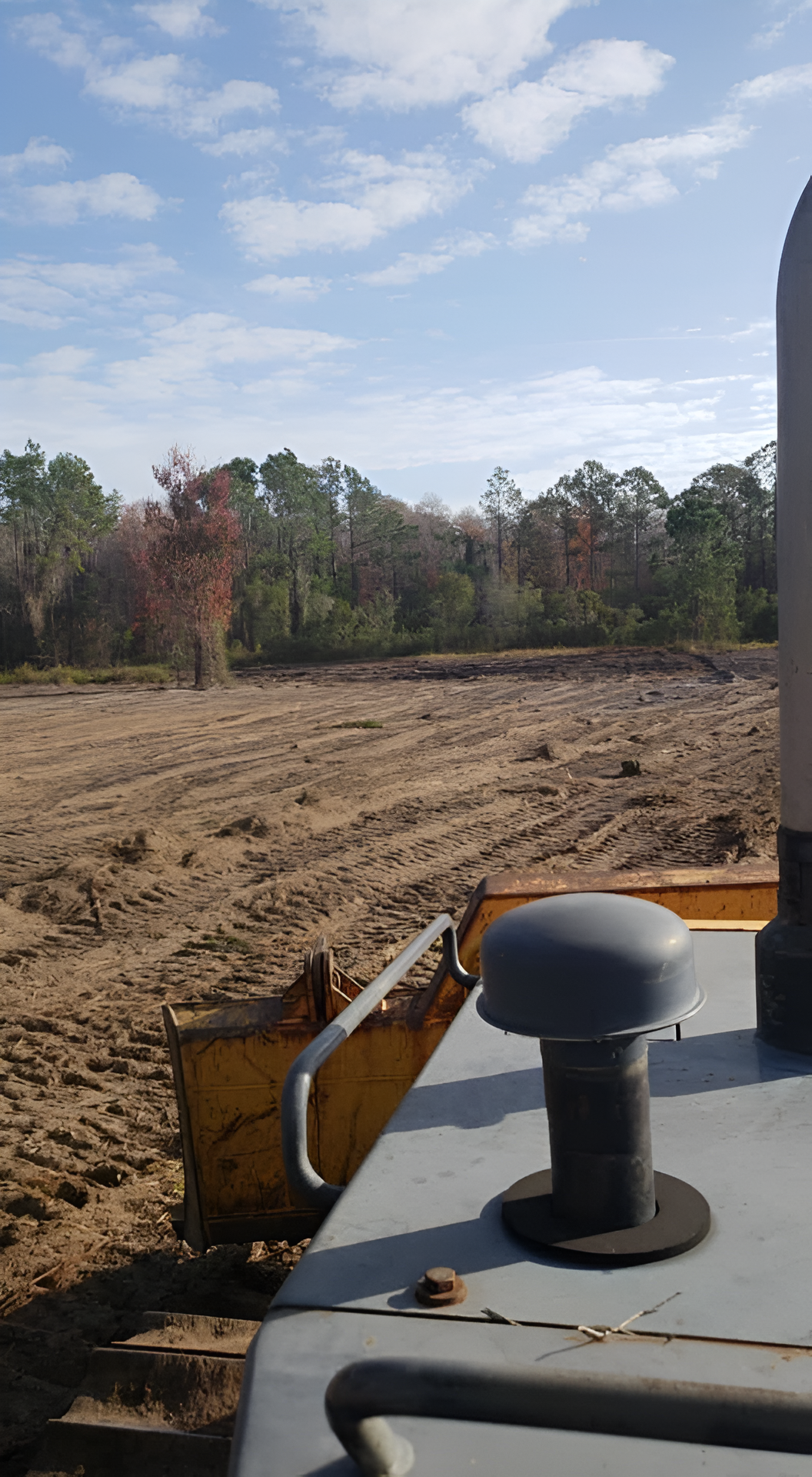
After clearing is complete, what property owners observe is unobstructed sight lines across the parcel, a ground surface free of tripping and equipment hazards, and defined boundaries where the cleared area meets retained vegetation or adjacent property. Drainage patterns become visible once surface vegetation is removed, which often reveals low spots and water routing issues that weren't apparent before clearing—information that affects how grading is planned in the next phase. Hurricane season and tropical storm activity in the Daytona Beach area creates periodic demand for emergency clearing on properties where fallen trees and debris accumulate quickly, and Rough Cut maintains 24/7 availability specifically for that response.
Clearing scope is not uniform across parcel types. A residential lot with light scrub clears in a different sequence than a multi-acre commercial parcel with established tree canopy and buried root systems. Site restoration requirements after clearing—whether the owner wants the surface mulched, graded, or left in native condition pending permits—also affect which equipment is used and how debris is handled at the end of the job.
Answers to Frequent Land Clearing Questions
Property owners in Lake Helen and across Volusia County commonly ask about clearing methods, permits, and how storm damage situations are handled differently from standard development clearing. The questions below address the most frequent points.
What clearing method is appropriate for palmetto scrub versus mature tree canopy?
Palmetto and light scrub are efficiently handled with forestry mulching equipment that grinds vegetation in place; mature tree canopy requires felling, limb removal, and stump grinding as separate operations before a mulcher can address remaining ground-level material.
How do wetland buffer requirements affect clearing boundaries in Volusia County?
Wetland buffers established by state and county regulation define a setback distance from protected water features where clearing is prohibited—those boundaries are marked before equipment mobilizes, and clearing operations stop at the designated line regardless of what vegetation exists inside the buffer.
When does land clearing in Lake Helen require a permit?
Clearing beyond a minimum threshold acreage, clearing near protected species habitat, and any work that alters drainage patterns or removes protected tree species typically triggers permit requirements through the applicable county or state authority.
Why does hurricane storm cleanup clearing differ from standard pre-development clearing?
Storm cleanup involves fallen material in unpredictable orientations with debris mixed into the vegetation mass, requiring hand work alongside equipment to safely access and remove downed trees without damaging structures or buried utilities.
How is cleared debris handled after the job is finished?
Depending on the site plan, vegetation is either mulched in place to create a stabilized surface layer, chipped and removed from the parcel, or staged for hauling—the decision is made based on what the next phase of site work requires and what the permit conditions allow.
Rough Cut Tractor Service is available around the clock for both scheduled clearing projects and emergency storm response across Volusia County. Call (386) 479-1457 to discuss your parcel's clearing requirements and get a direct assessment of scope and approach.