Full-Site Preparation Built for Complex Ground Conditions
Site Development in Lake Helen for raw land requiring clearing, grading, drainage design, and utility-ready preparation before construction begins
Rough Cut Tractor Service handles full-service site development for builders, developers, and commercial project owners across Lake Helen and the broader Volusia County corridor. This work covers every phase from initial land clearing through excavation, grading, backfilling, and material delivery—all executed with owned equipment operated directly on-site. Clients who need a single contractor to carry a raw parcel through to a construction-ready state without subcontracting delays or handoff gaps are the ones this operation is built to serve.
Florida site development involves a set of conditions that contractors from other regions frequently underestimate. Sandy soil profiles common to Central Florida compact differently than clay-heavy ground and require specific stabilization approaches before grading can produce a stable pad. Wet-season scheduling matters because ground saturation affects compaction results directly—work timed poorly through summer rain cycles often has to be redone. Permitting for site prep in Volusia County involves drainage design review that accounts for heavy rain events, and that review process shapes how grading and stormwater routing get laid out before a shovel touches the ground.
Arrange a site walk to identify grading requirements, drainage routing, and preparation scope before construction timelines are committed.
How Site Development Addresses Ground-Up Project Requirements
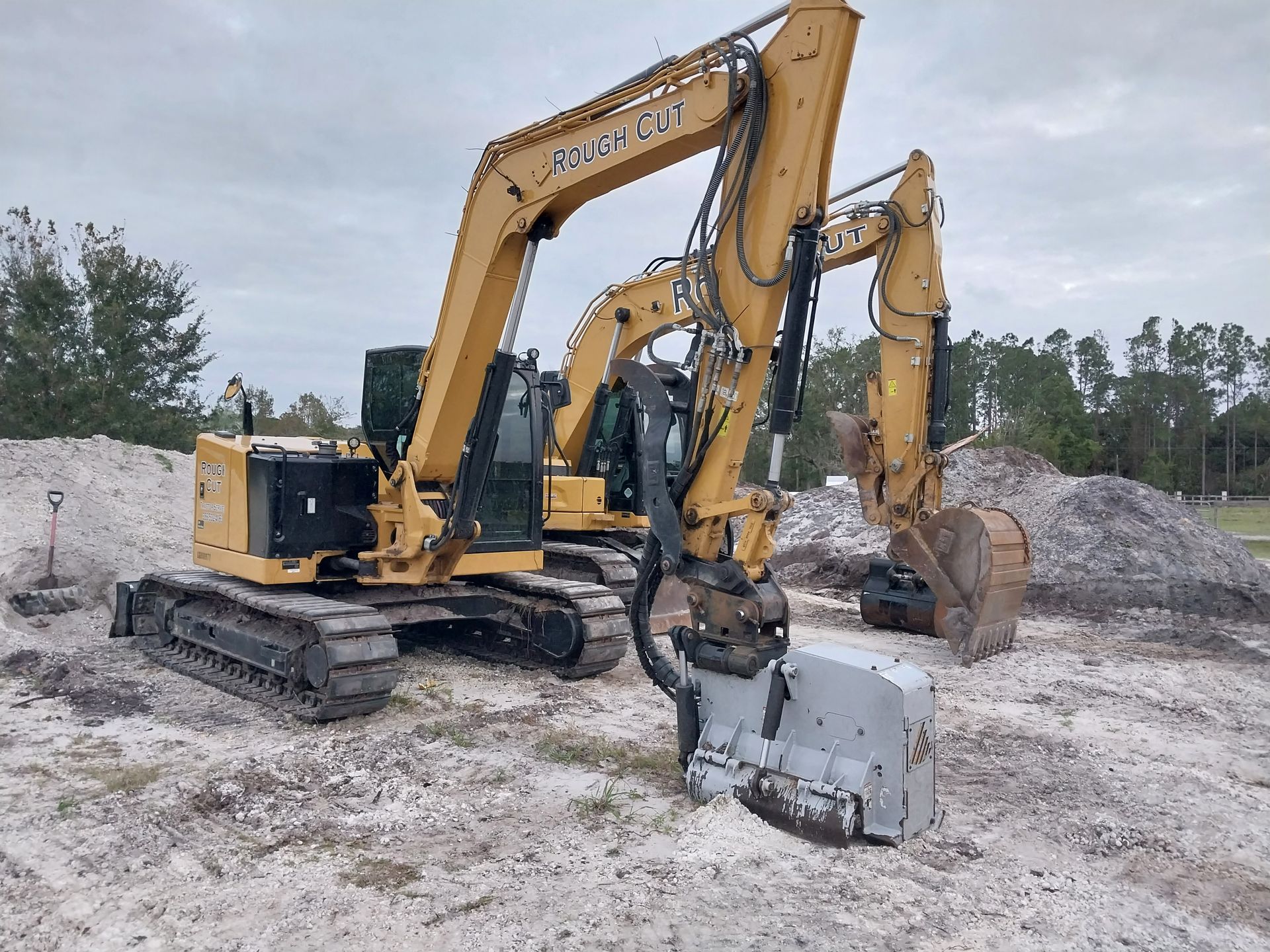
A full site development sequence at Rough Cut Tractor Service moves through land clearing, excavation, rough grading, backfilling, and final grade in a coordinated workflow managed by the owner on every project. Because equipment is owned rather than rented and fill material is sourced from an on-site dirt pit, scheduling decisions aren't driven by equipment availability from outside vendors. That operational structure allows the work to proceed on the project's timeline rather than a rental window. Emergency and after-hours site prep availability is maintained for projects where weather events or construction deadlines compress the schedule.
Once site development is complete, the observable change is a parcel that is level, properly drained, and accessible for foundation work—surfaces that held standing water after rain now sheet-drain to designed outlets, and areas with root masses or uneven fill have been brought to consistent grade. Utilities can be routed without encountering unplanned obstructions because the excavation phase addresses subsurface conditions before foundation contractors arrive. What clients notice most immediately is that the parcel stops behaving like raw land and starts behaving like a prepared build site.
Site development scope varies based on parcel size, existing vegetation density, soil conditions, and the drainage infrastructure required by permit. Projects handled by Rough Cut Tractor Service range from residential builder pads to large-scale commercial site preparation, and the approach on each is shaped by what the permit package and soil conditions actually require—not a standardized sequence applied uniformly regardless of ground conditions.
Common Questions About Site Development Projects
Site development projects in the Lake Helen area involve a range of variables that affect how work gets sequenced and permitted. The questions below address what property owners and builders most commonly need to understand before starting.
What does a turnkey site development scope typically include?
A full-service scope covers land clearing, excavation, rough and finish grading, backfilling, and material delivery—all coordinated through a single contractor rather than split across multiple vendors, which eliminates handoff delays between phases.
How does Florida's wet season affect site preparation scheduling?
Summer rain events saturate sandy soil quickly, and compaction work performed on oversaturated ground loses density over time—experienced site contractors schedule compaction-sensitive phases around precipitation patterns and allow drainage to stabilize before final grading.
Why does sandy soil in Volusia County require stabilization before grading?
Florida's coastal sandy profiles shift under equipment loads and erode along cut faces without stabilization—specific fill material selection and compaction sequencing are required to produce a stable grade that holds geometry through subsequent construction phases.
When is permitting required for site development in Lake Helen?
Most site development work involving grading, drainage alteration, or vegetation removal beyond a threshold acreage requires a permit through the applicable county or municipal authority, and drainage design documentation is typically part of that review.
What is the advantage of using a contractor who owns a dirt pit for fill material?
On-site material sourcing reduces delivery lead times and allows fill specifications to be matched to project requirements without depending on off-site suppliers whose inventory or scheduling may conflict with construction timelines.
Rough Cut Tractor Service maintains 24/7 availability for site development work, including emergency prep situations where weather or project timelines require after-hours response. Contact the office at (386) 479-1457 to discuss parcel conditions and schedule an initial site evaluation.