Overgrowth Cleared Before It Becomes a Larger Problem
Bush hogging in Lake Helen for seasonal overgrowth, fire break maintenance, and field preparation on neglected properties
Florida's wet season accelerates vegetation growth at a rate that surprises property owners who manage land in drier climates—a field that looked manageable in April can be chest-high by August. Rough Cut Tractor Service handles brush mowing and vegetation clearing across Lake Helen and Volusia County using tractor-mounted bush hog equipment scaled to match the density and terrain of each job. Properties with light seasonal growth, heavy palmetto stands, and everything in between require different equipment settings and pass patterns to leave a consistent cut rather than flattened stems that stand back up within weeks.
Bush hogging addresses more than appearance. In Volusia County, brush accumulation along property boundaries and in open fields creates conditions that slow drainage, reduce sight lines for traffic and security purposes, and increase fire risk during dry months. A proper cut lowers the fuel load by reducing the standing vegetation that ignites quickly, and on properties with drainage swales, clearing the surrounding growth allows water to move through rather than pooling behind vegetation mats. These are functional outcomes tied to how the work is done, not just how the property looks afterward.
Schedule a property visit to assess vegetation density and determine what equipment configuration suits your acreage.
What Bush Hogging Actually Accomplishes
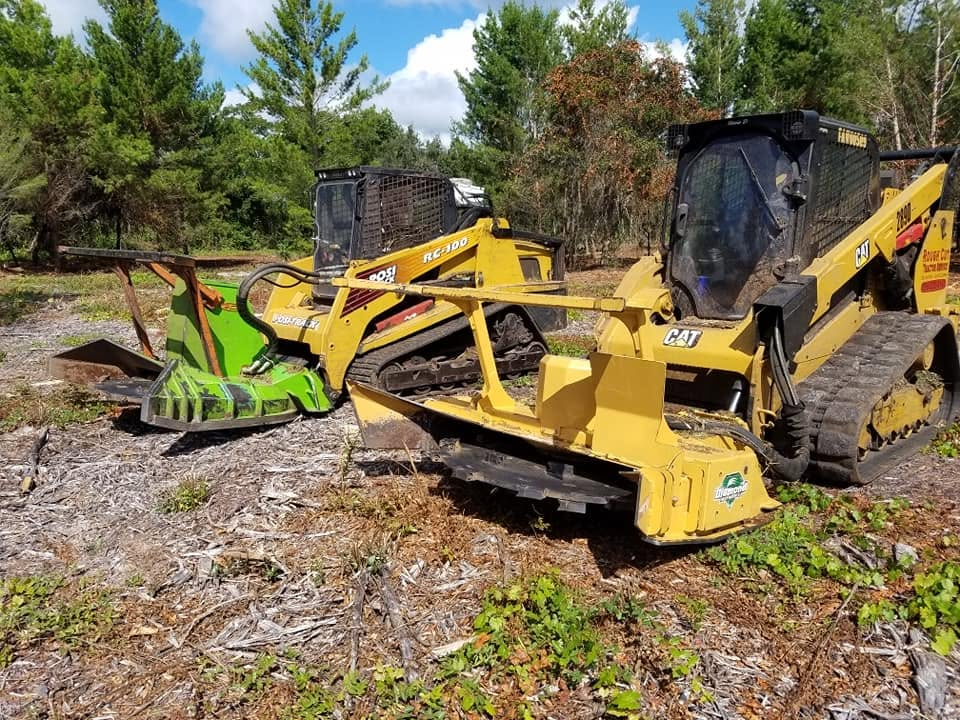
The bush hog itself is a rotary cutter mounted to a tractor's three-point hitch, driven by the PTO shaft, and designed to handle woody stems, tall grass, and mixed brush that a finish mower would stall on or damage. Rough Cut matches equipment size to the project—smaller tractors for tight access around structures or fencing, larger equipment for open acreage where pass width determines how long the job takes. Cutting height is adjustable and matters: cutting too low on sandy Florida soils scalps the root layer and promotes erosion, while cutting too high leaves material that regrows quickly and mats down into thatch.
After the work is finished, cleared fields show an even cut with ground-level visibility restored across the property. Drainage channels that were obscured by overgrowth become accessible again, and fence lines that had disappeared into brush are visible and inspectable. Properties cleared for agricultural or recreational use move from unusable to functional without requiring the full site-prep investment that forestry mulching or grading would involve.
Bush hogging integrates with Rough Cut's broader land-clearing and site-prep services when a project requires more than brush removal—if stumps, heavy debris, or grading are involved, those elements can be addressed through the same contractor without staging separate mobilizations for each phase of the work.
Answers to Frequent Service Questions
Bush hogging questions in Volusia County often focus on timing, frequency, and what the equipment can handle on properties that have been left unmanaged for extended periods. The answers below address the most practical concerns.
How often does a Florida property typically require bush hogging?
Wet-season growth rates in Central Florida mean most rural and semi-rural properties benefit from cutting two to three times per year, with the most critical timing coming before and after the summer rainy season.
What stem diameter can a bush hog handle before the work shifts to forestry mulching?
Standard bush hogging handles woody stems up to roughly three to four inches in diameter—above that threshold, the equipment risks blade damage and a mulching head becomes the more appropriate tool.
Why does cutting height matter on Lake Helen-area properties specifically?
Sandy soils throughout this part of Volusia County lose surface stability quickly when vegetation is removed too aggressively, so cutting height decisions balance effective clearing with protecting the soil layer from wind and rain erosion.
How is equipment size matched to the property?
Acreage, terrain slope, and proximity to structures or fencing determine whether a compact or full-sized tractor is appropriate—tighter sites near buildings require a narrower equipment profile to avoid contact with structures.
What maintenance is recommended after bush hogging to slow regrowth?
Reseeding cleared areas with a ground cover suited to Florida's soil type reduces the rate at which invasive vegetation reestablishes, particularly on open fields where bare soil after cutting gives fast-germinating weeds an immediate advantage.
Rough Cut Tractor Service handles brush clearing across Lake Helen and surrounding Volusia County properties—call (386) 479-1457 to describe your acreage, current vegetation conditions, and intended use for the cleared land.